


 Video
Video

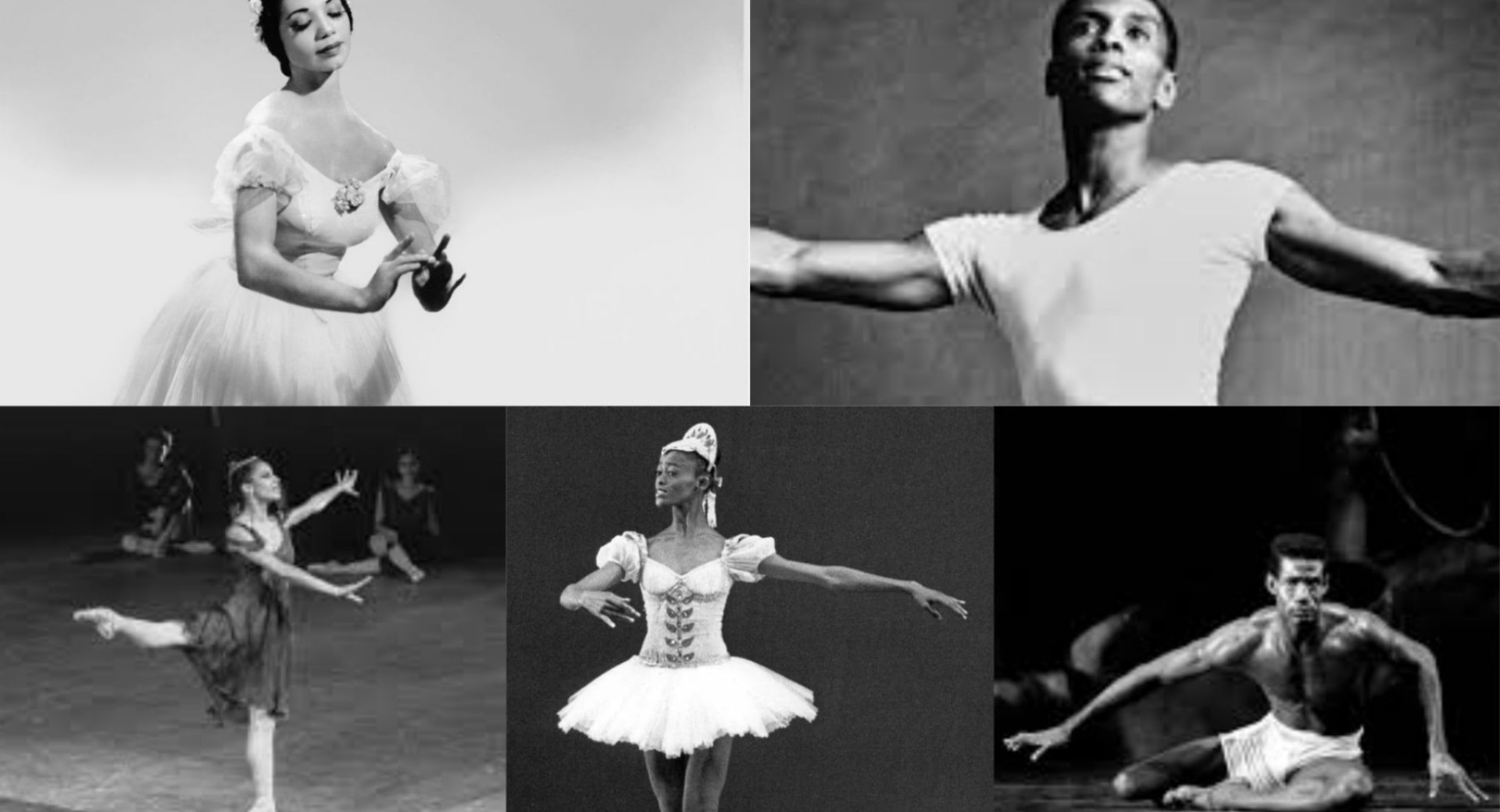
Celebrating Black History Month: Five Dancers to Recognize
As we are halfway through Black History Month, Milwaukee Ballet would like to honor and celebrate the Black leaders who have shaped history. Ballet, as a predominantly European form of dance, had a reputation for being a relatively exclusive art form with a stereotype that it was reserved for affluent white audiences. Many famous figures have shattered this barrier and gone to shape ballet into an inclusive art form of technical skill and storytelling. Here are a few Black dancers who have left their mark on ballet— pushing dance to its limits and thriving.
Raven Wilkinson
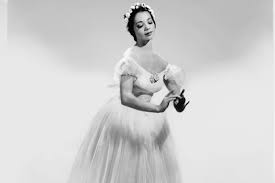
Photo Courtesy of Wilkinson.
Raven Wilkinson is credited with being the first African American woman to dance for a major classical ballet company. Facing segregation and discrimination, Wilkinson broke the color barrier for a long and successful career.
Born in 1935, Raven Wilkinson grew up in New York—across the street from what would become the home of the Dance Theatre of Harlem. She loved ballet as a child, seeing Ballet Russe de Monte Carlo perform Coppélia. Wilkinson began to learn eurhythmics before taking lessons at Swodoba School of Dance, later known as the Ballet Russe de Monte Carlo. Wilkinson consistently faced discrimination during auditions, with other ballet dancers advising her not to seek a position on the troupe. After three auditions, Wilkinson was accepted by the Ballet Russe Company Director on a short-term trial basis.
Wilkinson advanced quickly through the Ballet Russe de Monte Carlo, earning the position of soloist by just her second season. She traveled with the company for over six years and danced iconic roles in Giselle, Les Sylphides, Swan Lake, and more. Wilkinson faced scrutiny in segregated communities, often being forced to stay at separate hotels and miss certain performances out of safety concerns in some cities. Others within the troupe also worked against Wilkinson to slow her rise through the company’s ranks. With this stress, Wilkinson left the company in 1961.
After leaving, Wilkinson faced years of discrimination and rejection from other U.S. ballet companies. After seven years dancing with the Dutch National Ballet, Wilkinson returned to New York, where she was recruited by the New York City Opera to perform as a character dancer and actor. At this time, Wilkinson mentored a young Misty Copeland, providing guidance about navigating the world of ballet as a woman of color, and the two of them would remain lifelong friends and inspirations for one another. Wilkinson paved the way and opened countless doors for countless Black dancers to come.
Arthur Mitchell
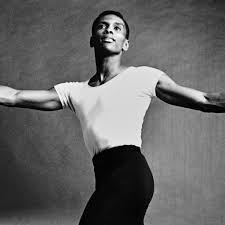
Photo Courtesy of Getty Images.
Arthur Mitchell achieved many firsts in the history of ballet, including being the first African American dancer at New York City Ballet and the founder of the first African American ballet company. Mitchell serves as an inspiration for cementing the place of Black dancers in ballet history.
Born in 1934 in Harlem, Mitchell first began learning classical ballet in high school and eventually earned a scholarship to study at the School of American Ballet. Mitchell began his career on Broadway performing in House of Flowers, dancing alongside Alvin Ailey and many other famous Black dancers. By 1955, Mitchell debuted as the first African American with the New York City Ballet, performing Balanchine’s Western Symphony. Within his first year, he rose to the position of principal dancer and performed in every ballet the company produced until 1966. Some of his most notable roles were in A Midsummer Night’s Dream, The Nutcracker, and Agon—which was created by Balanchine especially to highlight Mitchell’s athleticism. In Agon, Mitchell was paired with Diana Adams, a white ballerina, which caused uproar with some audiences. Mitchell, Balanchine, and Adams never budged due to the complaints and even danced in 1968 on The Tonight Show.
After leaving New York City Ballet in 1966 to appear in several Broadway productions, Mitchell helped several new international ballet companies find their footing and grow as organizations. Mitchell returned to Harlem in 1968, where he was determined to start a dance company within his community, leading to the creation of the Dance Theatre of Harlem. As the first-ever African American professional dance company and school, it provided increased professional opportunities for Black artists. Mitchell passed in 2018, but his legacy will live on for his artistry and constant commitment to creating new opportunities for Black dancers.
Debra Austin
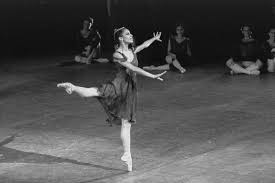
Photo Courtesy of Austin.
Debra Austin left her mark on ballet history as the first African American woman to earn the title of principal dancer at a major ballet company and as the first African American woman to dance in New York City Ballet. Today, Austin continues to leave her legacy as a ballet mistress, promoting a strong ballet education meant for anyone who loves dance.
Debra Austin was born in 1955 and began dancing at the age of eight. By twelve, Austin was awarded a scholarship to dance at the School of American Ballet, where she was handpicked by George Balanchine to join New York City Ballet. At 16, Austin was the first African American woman to join New York City Ballet, just five years after Arthur Mitchell left. Austin danced in the corps de ballet and as a soloist, even debuting Balanchine’s Ballo Della Regina, which had a solo choreographed just for her. After many years with New York City Ballet, Austin joined the Zurich Ballet in Switzerland as a Principal Artist, dancing opposite Rudolf Nureyev in many productions.
By 1982, the Artistic Director of Pennsylvania Ballet, Robert Weiss, hired Austin as a Principal Dancer. This made Austin the first African American woman to reach this rank in a major American ballet company, although others incorrectly credit this feat to Lauren Anderson at Houston Ballet in 1990. As a Principal Dancer with Pennsylvania Ballet, Austin danced in Swan Lake, Coppélia, Giselle, A Midsummer Night’s Dream, and many Balanchine pieces.
Upon retiring from dance in 1990, Austin would help choreograph new ballets and teach in various ballet schools around the country. In 1997, Robert Weiss of Pennsylvania Ballet founded Carolina Ballet, hiring Austin as a ballet master for the company, where she has remained since. As Austin continues to educate today, she leaves her mark on ballet history, opening doors for future Black artists to rise through ballet company rankings.
Mel Tomlinson
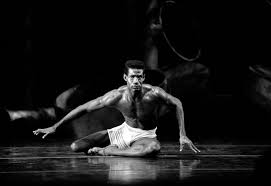
Photo Courtesy of The New York Times.
Mel Tomlinson was once referred to as “the most exciting Black dancer in America,” performing iconic roles and teaching the next generation of dancers.
Mel Tomlinson was born in Raleigh, North Carolina, and began dancing at a young age, earning a B.F.A. in dance from the North Carolina School of the Arts before joining Agnes de Mille Heritage Dance Theater. Tomlinson’s technical skills and emotional performance earned him a spot as a principal dancer directly out of college. By 1974, Tomlinson moved to the Dance Theatre of Harlem as a soloist and eventually to Alvin Ailey American Dance Theater. In 1981, Tomlinson joined New York City Ballet, where he was the only African American dancer in the company at the time.
At New York City Ballet, Tomlinson collaborated and danced in some of George Balanchine's final productions before his death in 1983. Most notably, Tomlinson stunned in Agon’s pas de deux as the last dancer to receive instruction from both Balanchine, the choreographer, and Arthur Mitchell, who originated the role. Tomlinson briefly retired after years of being a soloist at New York City Ballet and began teaching at his alma mater, North Carolina School of the Arts. He came out of retirement to dance with North Carolina Dance Theatre and Boston Ballet, where he served as a principal dancer and master teacher. Before he died in 2000, Tomlinson remained committed to expanding access to dance for all and educating the next generation of diverse dancers.
Karen Brown
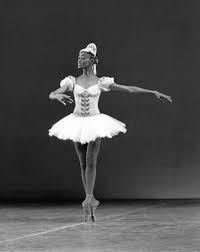
Photo Courtesy of Karen Brown.
Karen Brown has had an illustrious career as a ballerina, Artistic Director, studio founder, and educator. Her dedication to ballet has continued and honored the legacies of her own personal mentors, Mel Tomlinson and Arthur Mitchell.
Born in 1955, Brown began studying ballet at age eight with Ron Colton, a former New York City Ballet dancer. At the age of twelve, she began performing with Augusta Civic Ballet, and by age seventeen, she was recruited by Arthur Mitchell to join the Dance Theatre of Harlem. Performing as an apprentice, Brown was immediately recognized for her skill and versatility in both classical ballet and modern dance. Brown rose the ranks to principal ballerina, creating many milestones in history—including being the first American dancer to perform in Russia after the fall of the Soviet Union and South Africa after the end of apartheid.
After 22 years of dancing with the Dance Theatre of Harlem, Brown focused on growing as an educator. She joined Atlanta Ballet as director of education and diversity, and in 2000 was invited to be the Artistic Director of Oakland Ballet. This made Brown the first African American woman to be the sole director of a ballet company, where she focused on further diversifying ballet to reflect the cultural demographics of Oakland.
By 2007, Brown departed Oakland and began teaching ballet at various institutions while also founding En Pointe Plus Dance Mastery Institute, a studio specializing in furthering the dance careers of diverse artists. Today, Brown continues to commemorate the Black ballet pioneers who led the way, through her dancing, direction, and teaching.
Today, diverse casts of ballet dancers have become more prominent within large ballet companies. Amazing dancers such as Misty Copeland, Olivia Boisson, and Calvin Royal III highlight that ballet is an art form that thrives on diversity. While barriers still exist for Black dancers, the names above are just a few of the powerful figures who have shaped expectations and changed the history of ballet. This Black History Month, honor and remember all the important Black dancers who have worked, or are still working, to show the world that ballet has no boundaries.